Thursday January 19th
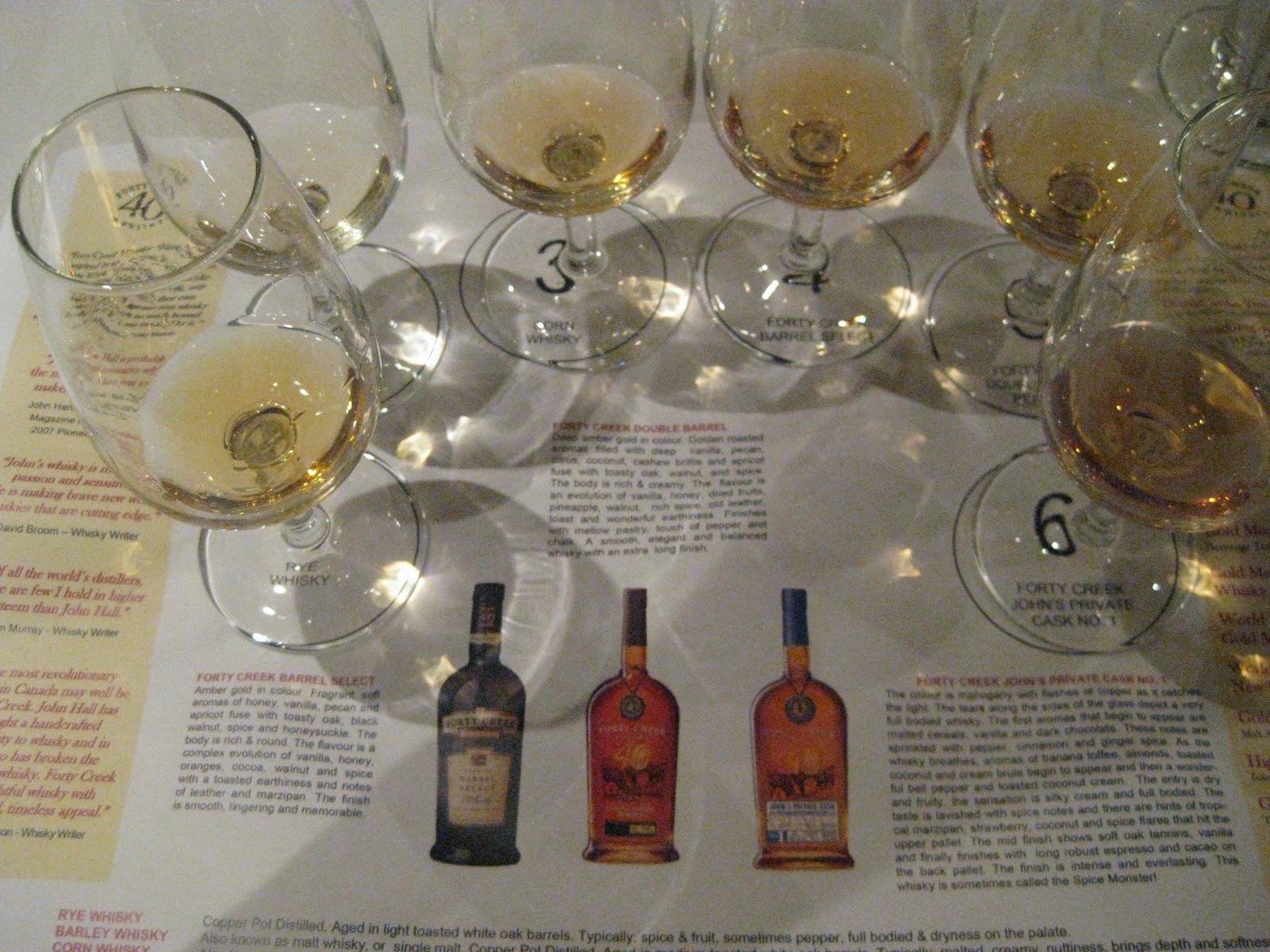
The Thursday evening kicked off the festival with a tasting hosted by the world renown Jim Murray. Having never been to a tasting with Jim before, I honestly had no idea what to except. Walking into the room, the fragrances of over 1000 glasses of whisky wafted through the air like a delicate perfume. Upon taking my seat I was both excited and terrified; 13 glasses of whisky sat in front of us.
Walking us through every whisky one-by-one, Jim had a story to go along with every one of the great whiskies he had chosen.
Walking us through every whisky one-by-one, Jim had a story to go along with every one of the great whiskies he had chosen.
 |
| Thirteen Stunning Whiskies |
With out reveling too much -wouldn't want to possibly ruin the surprise of a future Jim Murray tastings-, the whiskies ranged in price from $23.75 - $350, and included whisky from five different countries.
Ok, I'll let you know my three favorites of the tasting, but no more information!
Ok, I'll let you know my three favorites of the tasting, but no more information!
- Amrut Intermediate Sherry
- George T. Stagg
- Old Pulteney 21 Year Old
Friday January 20th
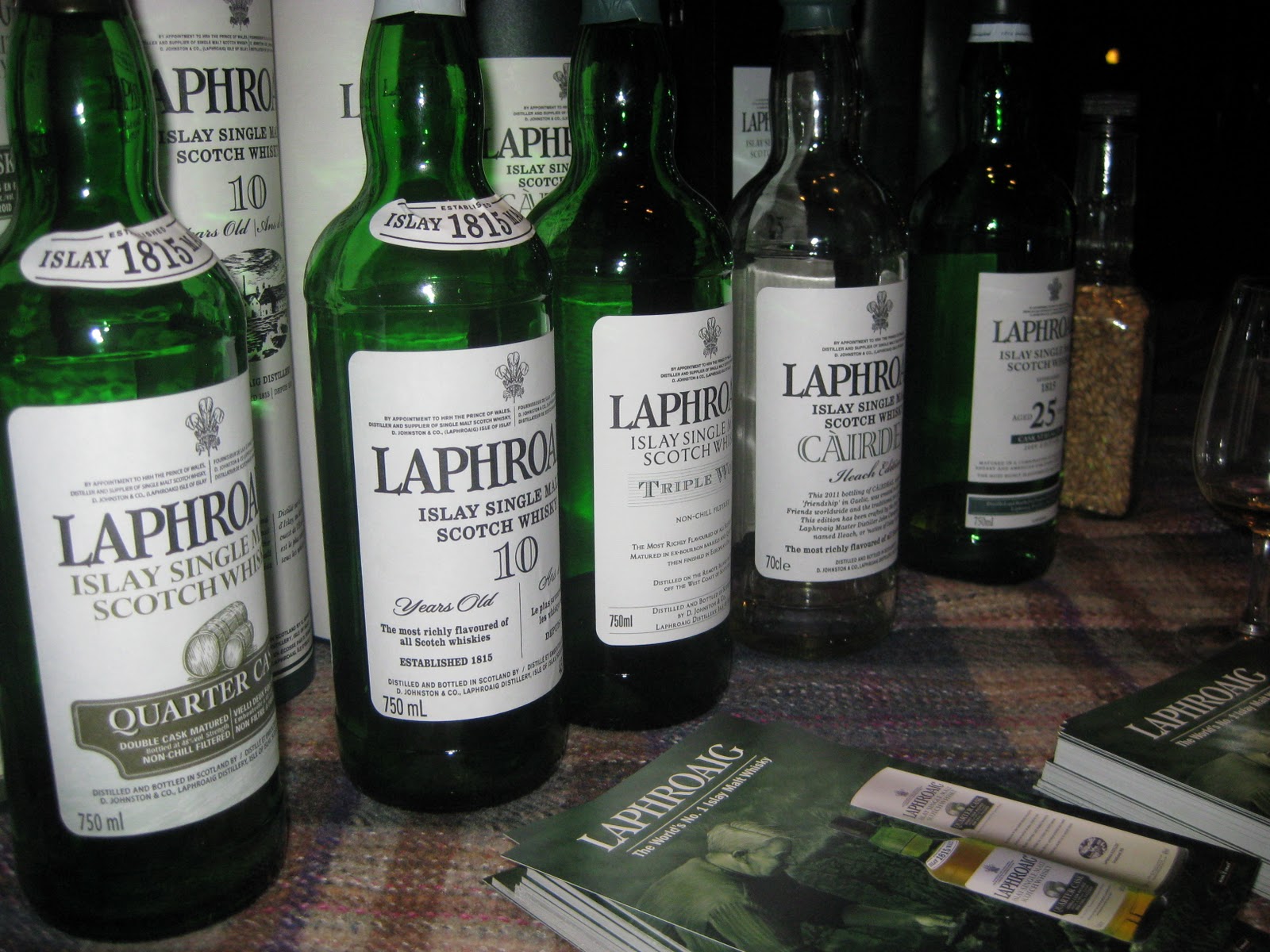
The following night was host to five grand tastings: Amrut, Balvenie, Canadian Club, Isle of Arran, and Laphroaig. Being that I am a peat-oholic, I chose to attend the Laphroaig grand tasting hosted by master ambassador, Simon Brooking.
If you remember the first post in my "Pre-Whisky Fest Fun" series, you'll remember my predictions for the Laphroaig line up: Quarter Cask, 10 Year Old, Triple Wood, Cairdeas, and 18 Year Old. Well I got 4/5. The bottle I was very pleasantly surprised to see was the Laphroaig 25 year old cask strength edition!

While the Quarter Cask and the 10 year old displayed typical Laphroaig characteristics of bbq, seaweed, and of course, loads of peat, the Triple Wood, Cairdeas, and 25 year old displayed some wonderfully unique complexities that I've yet to taste from any other Laphroaig.
The Laphroaig Triple Wood is essentially the Quarter Cask finished in sherry butts. On the nose of the Triple Wood, a sweet barley aroma along with raisins, dark chocolate, vanilla, and the slightest hint of smoke can be detected. The taste is equally complex and delicate as the nose. light peat, figs, raisins, and a touch of saltiness. The finish is long and gentle with a hint of smoke. Not very "Laphroaig" by tradition, but an exceptional dram none the less.

Laphroaig's annual Fèis Ìle bottling, Cairdeas (Gaelic for "friendship"), is a Laphroaig that is slightly more akin to the regular expressions from Laphroaig, but with some slight flavor twists. A vatting of whiskies of various ages, this year's bottling of Cairdeas is dubbed the "Ileach Edition" or "native of Islay" in Gaelic. The nose is full of typical Laphroaig notes of peat, smoked bacon. bbq, smoked salmon; and a touch of vanilla and icing sugar sweetness. The palate is full on Laphroaig: leather, shoe polish, band-aids, heavy peat smoke and a touch of banana. The finish is medium in length with moderately intense peaty note. This year's bottling of Cairdea does seem to be considerably younger than previous bottling, as well as being bottled at a lower ABV than previous year. Although still an exceptional whisky, not quiet as exceptional as its predecessors.

To conclude the tasting, the Laphroaig 25 Year Old Cask Strength. What a whisky! Laphroaig is know for being a take no prisoners, balls to the wall, peat monster. This whisky is anything but that. After 25 years in the barrel the peat has subdued and notes of blackberry, figs, dark chocolate, maple sugar, pineapple and lavender take front stage on the nose. The palate is equaliy complex with noes of tabbacco, leather, orange zest, basil, and a slightly peaty/salty characteristic. The finish is long and gentle with notes of sweet vanilla and the slightest hint of smoke.
While the Quarter Cask and the 10 year old displayed typical Laphroaig characteristics of bbq, seaweed, and of course, loads of peat, the Triple Wood, Cairdeas, and 25 year old displayed some wonderfully unique complexities that I've yet to taste from any other Laphroaig.
The Laphroaig Triple Wood is essentially the Quarter Cask finished in sherry butts. On the nose of the Triple Wood, a sweet barley aroma along with raisins, dark chocolate, vanilla, and the slightest hint of smoke can be detected. The taste is equally complex and delicate as the nose. light peat, figs, raisins, and a touch of saltiness. The finish is long and gentle with a hint of smoke. Not very "Laphroaig" by tradition, but an exceptional dram none the less.

Laphroaig's annual Fèis Ìle bottling, Cairdeas (Gaelic for "friendship"), is a Laphroaig that is slightly more akin to the regular expressions from Laphroaig, but with some slight flavor twists. A vatting of whiskies of various ages, this year's bottling of Cairdeas is dubbed the "Ileach Edition" or "native of Islay" in Gaelic. The nose is full of typical Laphroaig notes of peat, smoked bacon. bbq, smoked salmon; and a touch of vanilla and icing sugar sweetness. The palate is full on Laphroaig: leather, shoe polish, band-aids, heavy peat smoke and a touch of banana. The finish is medium in length with moderately intense peaty note. This year's bottling of Cairdea does seem to be considerably younger than previous bottling, as well as being bottled at a lower ABV than previous year. Although still an exceptional whisky, not quiet as exceptional as its predecessors.

To conclude the tasting, the Laphroaig 25 Year Old Cask Strength. What a whisky! Laphroaig is know for being a take no prisoners, balls to the wall, peat monster. This whisky is anything but that. After 25 years in the barrel the peat has subdued and notes of blackberry, figs, dark chocolate, maple sugar, pineapple and lavender take front stage on the nose. The palate is equaliy complex with noes of tabbacco, leather, orange zest, basil, and a slightly peaty/salty characteristic. The finish is long and gentle with notes of sweet vanilla and the slightest hint of smoke.

In addition to some exceptional whisky, Simon also brought some some items of interest including peat from Islay, and malted barley from the Laphroaig distillery.
 |
| Fresh and dried peat from the peat bogs of Islay |
Saturday January 21st
Saturday kicked off with three master classes: Gordon & MacPhail, Glenfarclas, and Balvenie. My first master class -Gordon & MacPhail- was really the wild card of the weekend. I had no idea what to expect. I sat down to see six whiskies to welcome me: Benromach 10 Year Old, Glen Grant 1996, Mortlach 21 Year Old, Linkwood 25 Year Old, Benromach 30 Year Old, and a "suprise sample"

Absoultly ever whisky at the Gordon & MacPhail master class was a lovely whisky, in particular the Mortlach 21 Year Old and the Benromach 30 Year Old.
The Mortlach 21 Year Old had a wonderful nose of pears, bannana, apple, and butterscotch. On the palate were notes of pears, white pepper, vanilla, and a hint of smoke. The finish was the real star aspect of this whisky. Notes of rich dried fruit and light peat smoke, accompanied by an ever developing finish resulted in a very memorable dram.
Winner of the best single malt (Multi cask) ages 28 - 34 in the 2012 Whisky Bible, the Benromach 30 Year Old is a knock out malt! The nose is very complex with notes of vanilla, chocolate, raisins, cinnamon, orange zest, candy floss, and pears. The tastes is equally enticing. Chocolate, pecans, apples, cinnamon, and a slight hint of peat. The Benromach 30 finishes long and rich, with notes of carmel, nutmeg, a touch of peat, and more chocolate.
You're probably wondering what the "special sample" was. So were all of us in the master class. After nosing and tasting for a few minutes a few of us came to the conclusion that it was a Glenlivet, approximately 25 years old. A very good guess, but only 45 years too young. It was the Glenlivet Generations 70 Year Old! Distilled in 1940 and bottled in 2010, this whisky defies all logic. After 70 years of aging in a first fill sherry butt you would expect it to tasted over sherried and over oaked. That was certainly not the case. While I was in a state of amazement, I was able to take brief tasting notes. The nose was very complex with notes of nutmeg, eggnog, leather, carmel, figs, raisins, orange zest and tobacco. The palate in so rich with dried fruit, carmel (not the nasty E150 kind), and a touch of peat. The finish is long and rich with a big note of milk chocolate. This was with out a doubt the best single malt I have ever taste. Unfortunately at $22 000 a bottle it is a bit out of my price range.
My next master class was hosted by one of my favorite speyside distilleries, Glenfarclas. Hosted by George Grant, George walked us through a tasting of the 8, 15, 17, 21, 25, Cask Strength 105, and Family Cask 1997. My favorites from this master class were the 8 Year Old, the 15 Year Old, and the Cask Strength 105. The 8 Year Old was very fruity. Candied green apple, apricot, as well as some citric notes. The finish was medium in length with lots of apple notes. I couldn't think of a more ideal summer whisky. The 15 Year Old was rich and sweet with notes of chocolate, toffee, banana, mocha, and a hint of salt. The finish was rich with notes reminiscent of chocolate covered almonds. The Cask Strength 105 was a cracker of a whisky, and one of my favorites of the weekend. On the nose was a great complexity of vanilla, plum, walnuts and again, a hint of salt. The taste was fruit with notes of pear and apple along with rich sherry characteristics. The finish, oh the finish! Loooooong and rich!


The final master class of the evening was hosted by Sam Simmons, master ambassador of The Balvenie. This master class had the most unique, approach of the weekend. Rather than just a tasting of the basic line up, Sam deconstructed the three elements that make up The Balvenie 12 Year Old Signature. A vatting of 1st fill and 2nd fill bourbon, and 1st fill sherry. In addition to a cask sample from each element of the 12 Year Old Signature, we all tasted the Signature itself, new makes spirit at still proof, and The Balvenie 30 Year Old. With already two master classes worth of whisky in me all ready, I decided to bottle up all my samples from The Balvenie class im my 25ml sample bottles that I brought to the festival. So look forward to a blog post on the deconstruction of The Balvenie 12 Year Old Signature, and proper tasting notes from The Balvenie 30 Year Old.
The best news I heard from the seminar was that, starting later in 2012, The Balvenie will be taking the no coloring, not chill filtration, 43% ABV, approach to making their whisky!

After three amazing master classes It was time for the grand tasting. Not much to explain with this event, I walked around and tasted lots of whiskies. So here are some photos from the evening.


After tasting well over 100 whiskies on what could be the best weekend of 2012, I have come to the conclusion on my 10 Ten Whiskies of The Weekend.
Saturday kicked off with three master classes: Gordon & MacPhail, Glenfarclas, and Balvenie. My first master class -Gordon & MacPhail- was really the wild card of the weekend. I had no idea what to expect. I sat down to see six whiskies to welcome me: Benromach 10 Year Old, Glen Grant 1996, Mortlach 21 Year Old, Linkwood 25 Year Old, Benromach 30 Year Old, and a "suprise sample"

Absoultly ever whisky at the Gordon & MacPhail master class was a lovely whisky, in particular the Mortlach 21 Year Old and the Benromach 30 Year Old.
The Mortlach 21 Year Old had a wonderful nose of pears, bannana, apple, and butterscotch. On the palate were notes of pears, white pepper, vanilla, and a hint of smoke. The finish was the real star aspect of this whisky. Notes of rich dried fruit and light peat smoke, accompanied by an ever developing finish resulted in a very memorable dram.
Winner of the best single malt (Multi cask) ages 28 - 34 in the 2012 Whisky Bible, the Benromach 30 Year Old is a knock out malt! The nose is very complex with notes of vanilla, chocolate, raisins, cinnamon, orange zest, candy floss, and pears. The tastes is equally enticing. Chocolate, pecans, apples, cinnamon, and a slight hint of peat. The Benromach 30 finishes long and rich, with notes of carmel, nutmeg, a touch of peat, and more chocolate.
You're probably wondering what the "special sample" was. So were all of us in the master class. After nosing and tasting for a few minutes a few of us came to the conclusion that it was a Glenlivet, approximately 25 years old. A very good guess, but only 45 years too young. It was the Glenlivet Generations 70 Year Old! Distilled in 1940 and bottled in 2010, this whisky defies all logic. After 70 years of aging in a first fill sherry butt you would expect it to tasted over sherried and over oaked. That was certainly not the case. While I was in a state of amazement, I was able to take brief tasting notes. The nose was very complex with notes of nutmeg, eggnog, leather, carmel, figs, raisins, orange zest and tobacco. The palate in so rich with dried fruit, carmel (not the nasty E150 kind), and a touch of peat. The finish is long and rich with a big note of milk chocolate. This was with out a doubt the best single malt I have ever taste. Unfortunately at $22 000 a bottle it is a bit out of my price range.
My next master class was hosted by one of my favorite speyside distilleries, Glenfarclas. Hosted by George Grant, George walked us through a tasting of the 8, 15, 17, 21, 25, Cask Strength 105, and Family Cask 1997. My favorites from this master class were the 8 Year Old, the 15 Year Old, and the Cask Strength 105. The 8 Year Old was very fruity. Candied green apple, apricot, as well as some citric notes. The finish was medium in length with lots of apple notes. I couldn't think of a more ideal summer whisky. The 15 Year Old was rich and sweet with notes of chocolate, toffee, banana, mocha, and a hint of salt. The finish was rich with notes reminiscent of chocolate covered almonds. The Cask Strength 105 was a cracker of a whisky, and one of my favorites of the weekend. On the nose was a great complexity of vanilla, plum, walnuts and again, a hint of salt. The taste was fruit with notes of pear and apple along with rich sherry characteristics. The finish, oh the finish! Loooooong and rich!


The best news I heard from the seminar was that, starting later in 2012, The Balvenie will be taking the no coloring, not chill filtration, 43% ABV, approach to making their whisky!

After three amazing master classes It was time for the grand tasting. Not much to explain with this event, I walked around and tasted lots of whiskies. So here are some photos from the evening.
 |
| Some exceptional Japanese Whiskies from Nikka |
 |
| JD's new make spirit before and after charcole |


Victoria Spirit's "Craigdarroch" work in progress single Malt Whisky


 |
| A "Under the Table Treasure" |
 |
| Another "Under the Table Treasure" |
After tasting well over 100 whiskies on what could be the best weekend of 2012, I have come to the conclusion on my 10 Ten Whiskies of The Weekend.
- 10. Glenfarclas 40 Year Old
- 9. Glenrothes 1975
- 8. Glenfarclas 105 Cask Strength
- 7. Springbank 18 Year Old
- 6. Laphroaig 25 Year Old Cask Strength
- 5. Benromach 30 Year Old
- 4. Old Pulteney 21 Year Old
- 3. Tullibardine 1962 49 Year Old
- 2. George T. Stagg Bourbon
- 1. Gordan & McPhail 70 Year Old Glenlivet